
Parliament on Thursday passed a bill to amend the anti-paper leak law to introduce stricter punishments, with the government expressing its commitment to go the extra mile to safeguard the interests of students, who are the country's future.

The DMK has announced it will meticulously examine the proposed delimitation Bill when it is introduced in Parliament, making a decision based on its merits to safeguard Tamil Nadu's interests. The party's stance will be independent, without consultation with the Congress party, despite their former alliance.

The Lok Sabha stalemate is expected to conclude as Speaker Om Birla has secured an agreement from all political parties to discuss the Public Examination (Prevention of Unfair Means) Amendment Bill 2026. This bill proposes stricter punishments, including up to 10 years in jail and a Rs 50 lakh fine, for paper leak offences, following recent nationwide student protests over the NEET fiasco.

The Lok Sabha passed two Bills, including one to rename Kerala as Keralam, without debate as Opposition members continued their protests, demanding Union Home Minister Amit Shah's presence to address police excesses against student protesters and alleged Ram temple fund irregularities.

'When the House adjourned, they were not yet getting 360. They were short of that, maybe by six or seven or ten.' 'So they wanted to break more parties and get their support, and they were engaged in that.'

The Indian government and opposition are preparing for a contentious Monsoon Session of Parliament, with key issues including the Constitution Amendment Bill on delimitation and women's reservation, the alleged NEET paper leak, and a row over Ram temple donations set to spark heated debates.
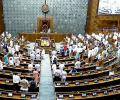
The Congress party is set to challenge the Modi government on a range of critical issues, including alleged theft of Ram temple donations, 'systemic corrosion' of the education system, and constitutional amendment bills related to delimitation and dismissal of ministers, during the upcoming Monsoon Session of Parliament.

Prime Minister Narendra Modi has announced comprehensive reforms in the education system to combat paper leaks, following the passage of a new anti-paper leak law. He asserted that there would be no leniency for those involved in examination irregularities, highlighting the government's commitment to ensuring fair opportunities for students.

The Union Cabinet has approved a draft bill to introduce stricter punishments for examination paper leaks, following Prime Minister Narendra Modi's announcement. This new legislation builds upon the Public Examinations (Prevention of Unfair Means) Act, 2024, aiming to curb cheating in public examinations conducted by various central agencies amidst recent controversies like the NEET and NET paper leaks.

The Indian Parliament has passed a bill amending the Transgender Persons (Protection of Rights) Act 2019, focusing on biological discrimination and excluding social orientations from its scope. The bill aims to provide legal recognition and protection to transgender individuals facing discrimination due to biological issues, while also introducing graded punishments for harm inflicted on them.

The Monsoon Session of Parliament for 2026 is scheduled from July 20 to August 13, with significant political developments expected following recent assembly poll results and internal party rebellions. The session will see the ruling NDA's strengthened position in the Rajya Sabha and potential redrafting of a key Constitution amendment bill.

A US Congressman has raised serious concerns regarding India's proposed amendments to the Foreign Contribution Regulation Act (FCRA), warning that these changes could lead to government takeovers of religious charities and strain bilateral relations.

The Lok Sabha has approved an amendment to India's anti-paper leak law, introducing stricter punishments including jail terms of up to 10 years and fines of up to Rs 50 lakh, in response to recent large-scale student protests and the NEET paper leak case.
The dramatic postponement came while members were voting on the committee's five principal recommendations, making it an unprecedented moment in the functioning of a parliamentary committee.

A Joint Committee of Parliament has deferred the adoption of a draft report on a bill proposing the suspension, not permanent removal, of the prime minister, Union ministers, and chief ministers if detained for 30 days on serious criminal charges, opting for more consultations.

'An individual who is protesting and expressing dissent is a walking Jantar Mantar.' 'Every mind which is expressing dissent and questioning is a Jantar Mantar.'

Amid renewed speculation about political realignments and a potential merger, senior leaders from two Nationalist Congress Party (NCP) factions met Maharashtra Chief Minister Devendra Fadnavis. NCP (SP) working president Supriya Sule clarified her party's position on the proposed Delimitation Bill, stating that while a uniform 50 per cent increase in seats across states would be hard to oppose, any final decision would be made after discussions within the INDIA bloc.

Parliament embraced Gen Z lingo during a Lok Sabha debate on the crucial anti-paper leak amendment bill.

The Indian government plans to introduce a bill in the Rajya Sabha to make obstruction or insult to the national song 'Vande Mataram' a criminal offence. This amendment to the Prevention of Insults to National Honour Act, 1971, aims to grant 'Vande Mataram' the same statutory protection as the national anthem, 'Jana Gana Mana', with penalties up to three years' imprisonment.

Amidst widespread student protests over the NEET paper leak, the Indian government has introduced the Public Examinations (Prevention of Unfair Means) Amendment Bill, 2026, in the Lok Sabha. The bill proposes significantly stricter punishments, including jail terms of up to 10 years and fines of up to Rs 50 lakh for individuals involved in paper leaks, and up to Rs 10 crore for organised crimes, aiming to enhance transparency and fairness in public examinations.

A government bill proposing to widen the remit of the Indian Statistical Institute (ISI) is facing scrutiny from Members of Parliament. Concerns have been raised that the Indian Statistical Institute Bill, 2026, could reduce the premier institute's autonomy. The bill, currently under examination by a Parliamentary Standing Committee on Finance, aims to incorporate ISI as a 'body corporate' to strengthen governance and promote academic excellence, but critics fear increased government control.
India's Monsoon session of Parliament remains formally unprorogued 40 days after adjournment, setting a new record. This unusual delay fuels speculation that the government intends to introduce a key legislation, possibly an amendment to the women's reservation law, without convening a new session. The proposed amendment aims for a 50 per cent seat expansion to address concerns over delimitation.

After six days of stalemate, a discussion on the anti-paper leak bill began on Tuesday in Lok Sabha with the government describing it as a reaffirmation of ruling dispensation's commitment to safeguard the welfare of students but opposition hit back over the lathi-charge on protesters, saying every blow on them hurt the government's prestige more than the backs of the youth.

The Congress party has criticised the government's recent notification regarding UPI transactions, alleging it paves the way for users to be charged fees, particularly for transactions above Rs 2,000. The party claims the government lacks transparency and questions if the move is to benefit American firms. The government, however, states that charges are necessary for the system's sustainability and infrastructure upgrades, with the Finance Minister clarifying that Merchant Discount Rate (MDR) applies to merchants, not customers.

The Ministry of Home Affairs informed a Joint Committee of Parliament that the number of active NGOs registered under the Foreign Contribution (Regulation) Act has halved over the last decade, even as foreign funds received by them have significantly increased. Christian associations received the largest share of these funds in 2024-25. The report comes amidst discussions on a contentious FCRA amendment bill aimed at tighter government oversight.
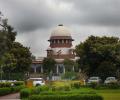
The Joint Parliamentary Committee (JPC) on simultaneous elections had scheduled an "informal interaction" with Supreme Court judges, which was later cancelled by the apex court. The Supreme Court deemed the meeting inappropriate as the proposed constitutional amendment could become subject to judicial review. JPC Chairman PP Chaudhary defended the panel's initial decision, citing precedents, while DMK MP P Wilson, who mooted the idea, expressed disappointment and argued against the notion that such interactions violate separation of powers.

Congress leader Rahul Gandhi has accused the Modi government of quietly paving the way for imposing fees on UPI transactions, alleging it's a surrender to American pressure. The government's recent notification exempts charges only up to Rs 2,000, sparking concerns that higher value transactions and eventually all UPI payments could incur fees. Finance Minister Nirmala Sitharaman, however, clarified that Merchant Discount Rate (MDR) applies to merchants, not customers, and supports digital infrastructure.

Opposition parties disrupted Lok Sabha proceedings on the opening day of the Monsoon Session, leading to multiple adjournments. Protests focused on the alleged NEET paper leak and Ram temple donation theft issues, with demands for Education Minister Dharmendra Pradhan's resignation. The House was eventually adjourned for the day after repeated appeals for order failed.

Jantar Mantar, a historic protest site in New Delhi, is facing de-notification by Delhi Police, raising concerns about its future as a space for public dissent. The site has been central to numerous significant movements, from Anna Hazare's anti-corruption fast and the Nirbhaya protests to recent agitations over NEET paper leaks and wrestlers' grievances. Its proximity to power centres made it a crucial platform for citizens to voice concerns and demand accountability, a role now threatened by its potential loss of status.

Bihar Deputy Chief Minister Vijay Kumar Chaudhary stated that the JD(U) will thoroughly study the Uniform Civil Code (UCC) Bill before deciding on its stance, indicating they will not oppose it without valid reasons. This position contrasts with the RJD's strong opposition and highlights the JD(U)'s independent approach within the NDA.
Finance Minister Nirmala Sitharaman clarified that the Merchant Discount Rate (MDR) on digital transactions applies to merchants, not customers, and aims to support banks and fintech in infrastructure investment. She countered Congress leader Jairam Ramesh's claims, stating that a committee will decide on MDR only after Parliament passes the Taxation and Other Laws (Amendment) Bill, 2026, a process currently stalled by parliamentary disruptions.
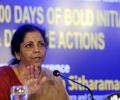
A high-level committee, including representatives from banks and payment associations, is set to decide on Merchant Discount Rate (MDR) for UPI transactions exceeding Rs 2,000 to merchants. While person-to-person and person-to-merchant transactions up to Rs 2,000 remain free, the move follows a recent amendment to the Payment and Settlement Systems Act, sparking debate and clarification from the Finance Minister that only certain high-value merchant transactions might incur charges.

Parliament proceedings were stalled for the fourth consecutive day on Thursday as loud protests by an unrelenting opposition over the NEET paper leak and demand for Education Minister Dharmendra Pradhan's resignation reverberated in both Lok Sabha and Rajya Sabha, leading to adjournment of the two Houses for the day without transacting any business.

'Nitishji as CM never supported the UCC and publicly expressed his strong reservations over UCC.'

Both Houses of Parliament were adjourned sine die, concluding a Budget session marked by the passage of key legislations and the defeat of a Constitution amendment bill on women's reservation. The session saw frequent opposition protests and discussions on various issues, including the West Asia conflict.

Prime Minister Narendra Modi held a breakfast meeting with 37 BJP MPs, including recent AAP defectors, where he emphasised the importance of smooth parliamentary proceedings. He also advised MPs on taking their roles seriously, utilising the Parliament library, engaging with youth, and effectively implementing MPLADS.

Tamil Nadu Chief Minister M K Stalin celebrated the defeat of the Constitution Amendment Bill in the Lok Sabha, emphasising the unity of the south and the triumph of democracy. The bill aimed to implement reservation for women in legislatures in 2029 and increase Lok Sabha seats. Stalin criticised the bill as weakening the balance of the union and asserted Tamil Nadu's commitment to justice, dignity, and federalism.

The Indian government has mandated that banks and payment providers cannot levy charges on UPI transactions up to Rs 2,000 or on payments made via RuPay debit cards. This directive follows an amendment to the Payment and Settlement Systems Act, 2007, aiming to sustain and expand the digital payments ecosystem.

Home Minister Amit Shah has offered to hold a comprehensive debate in Parliament on student protests and other pressing issues, but Congress leader Rahul Gandhi has swiftly rejected the proposal, demanding accountability for actions against students.

The Lok Sabha secretariat has requested a response from Leader of Opposition Rahul Gandhi regarding two privilege complaints filed by BJP MPs Anurag Thakur and Sanjay Jaiswal. The complaints stem from Gandhi's remarks against Home Minister Amit Shah during a debate on the anti-paper leak bill, which the BJP MPs deemed "unparliamentary" and a breach of privilege. Gandhi has until August 28 to submit his explanation to the Privileges Committee.
